Author: traveler

  • Love Locks

    Love Locks

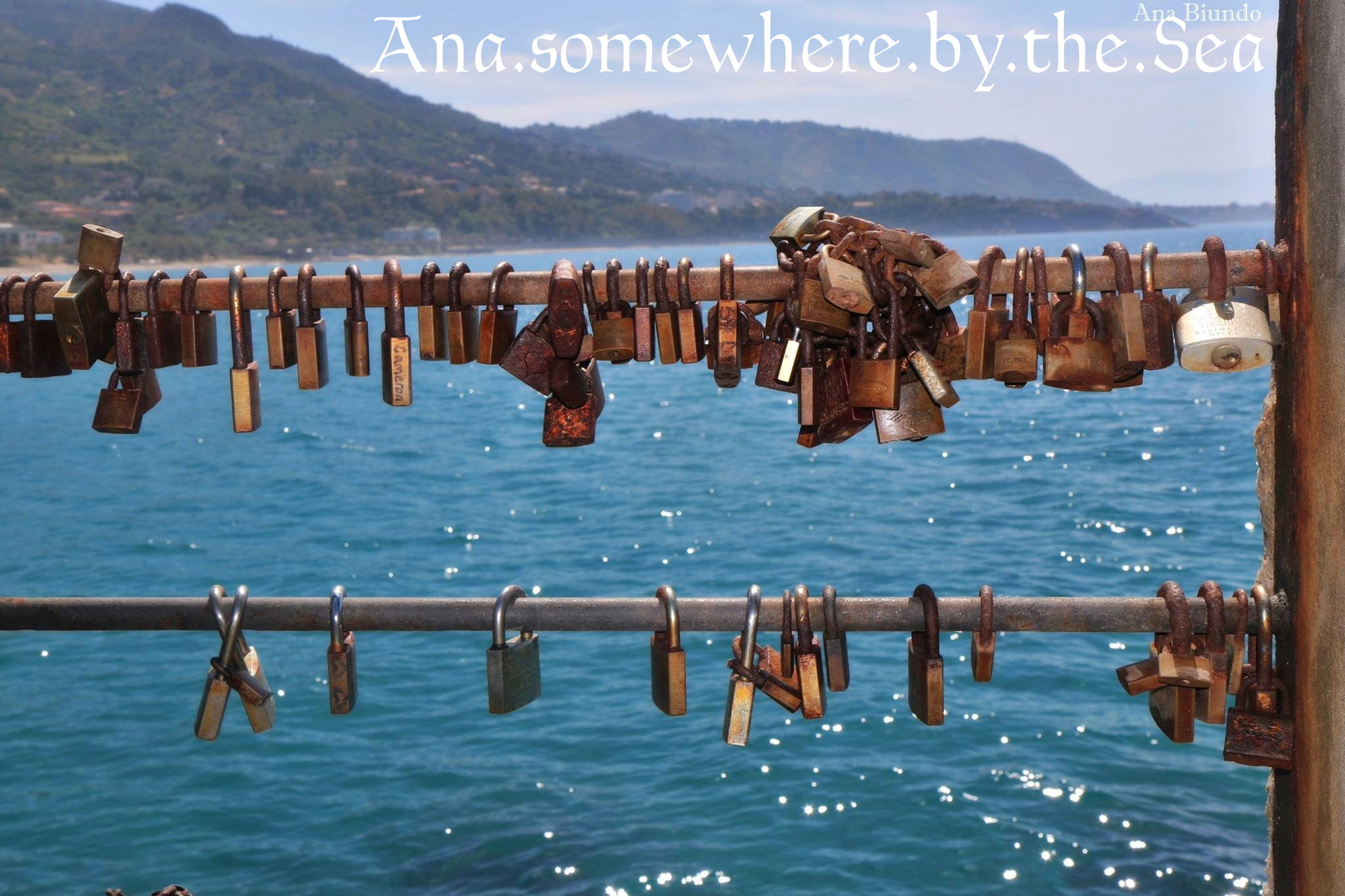
    I discovered ‘Love Locks’ in Cefalù (in Sicily).

    Had no idea what they were, but I was so intrigued, I stopped to take this photo.

    I later found out that lovers write their names on the lock, then toss the key into the sea.

    (i lucchetti dell’amore in Cefalù~ gli amanti scrivono i loro nomi sul lucchetto, poi buttano la chiave in mare.)

    I have since found out that this is also done on bridges over rivers, on fences. and various other locations throughout Europe and around the world.

    A small ritual of love

    Love locks are part gesture, part promise. Couples fasten a padlock to a bridge, fence, railing, or gate, write or engrave their names on it, and throw away the key as a symbol of lasting attachment. What feels ancient is actually a fairly modern custom, but it has spread so widely that it now seems to belong everywhere at once.

    One of the most often-cited early stories comes from Serbia, where a tale linked to a bridge in Vrnjačka Banja is said to have inspired the practice in local memory.

    The modern popularity of love locks, though, is usually connected to Italy and to Federico Moccia’s 2006 novel Ho voglia di te (I Want You), followed by its film adaptation. In that story, lovers attach a lock to Rome’s Ponte Milvio and throw the key into the Tiber. After that, the ritual spread quickly in Italy and then across Europe.

    From Paris to Prague, from small seaside railings to famous city bridges, love locks became a way for travelers and locals alike to leave behind a visible trace of affection. Some cities have embraced them for a time; others have removed them because the weight of thousands of locks could potentially damage historic structures. Even so, the idea endured. It moved from bridge to bridge, fence to fence, coast to coast.

    What stayed with me most was seeing them there in Cefalù. When I first noticed them, I felt curious more than anything. I stood there wondering about them, with the beautiful and majestic sea just beyond. The whole moment felt quietly enchanting. This is how a place becomes part of someone’s memory forever. Especially with a photograph taken in a surprised moment of wonder and intrigue.

    Some travel memories are photographs. Others are rituals you happen to stumble upon and feel in the moment.

    If you have seen Love Locks in another city, I would love to know where.
  • How to Travel Like Home: A Simple Rhythm for Planning (and Feeling Better on the Road)

    How to Travel Like Home: A Simple Rhythm for Planning (and Feeling Better on the Road)

    How this blog works I’m Ana somewhere by the sea, and this is Traveling Was My Home—a place for people who don’t just want to go somewhere, but want to arrive inside themselves. Here you’ll find destination guides across Europe and North America, practical travel tips you can use immediately, and the in-between moments that make a trip feel like a turning point. The “home” mindset Home isn’t always an address. Sometimes it’s a rhythm: a morning walk in a new neighborhood, a familiar coffee order in an unfamiliar language, a small plan that keeps you steady while everything else is in motion. If the journey is your home, you don’t need a perfect itinerary—you need a few anchors. Three anchors for every trip 1) Choose a mood, not a checklist Before you pick neighborhoods or day trips, pick the feeling you’re chasing: an emotional reset, momentum, connection, or quiet. Your mood is the map.
    • Reset: coastlines, parks, slow cafés, early nights.
    • Momentum: big cities, museums, long walks, late trains.
    • Connection: markets, small tours, shared tables, local events.
    2) Build one “repeatable day” Design a day you can copy-paste when decision fatigue hits. It’s not boring—it’s protective.
    • One must (a museum, a viewpoint, a neighborhood).
    • One meal plan (a saved spot + a backup).
    • One walk (a loop you can do again tomorrow).
    • One early stop (so you can rest without guilt).
    3) Pack for the person you are at 6 p.m. The version of you who lands is optimistic. The version of you who checks in at 6 p.m. is tired, hungry, and one small inconvenience away from spiraling. Pack and plan for that person.
    • A snack you actually like.
    • A layer for wind or over-air-conditioned trains.
    • A small “comfort ritual” (tea bags, a playlist, a paperback).
    • Offline essentials (maps, address, reservation screenshots).
    What’s next If you’re new here, start with the destination that matches your mood—then come back for the practical pieces that make travel feel lighter. I’ll be sharing guides, itineraries, and the kind of tips you only learn after you’ve missed a train and still made it to the sunset. Welcome to Traveling Was My Home. Let’s make the road feel like it knows you.